

Table of Contents
-
Planning the Electrical Layout
-
Understanding Building Codes and Regulations
-
Service Panel and Circuit Design
-
Choosing the Right Lighting Solutions
-
Addressing Special Electrical Needs
-
Collaborating with Other Contractors
-
Future-Proofing Your Home
-
Conclusion
Embarking on new home construction is an exciting milestone. Amid the architectural and interior design choices, it is essential to give careful consideration to your electrical system. A comprehensive approach not only guarantees safety but also paves the way for a functional and future-ready home. For those starting this journey, planning electrical services Philadelphia PA is a foundational step that can help set the stage for a well-wired, adaptable living space.
The decisions you make during the planning phase impact comfort, convenience, and even the potential to seamlessly integrate new technologies down the line. Efficient electrical planning ensures you are prepared for modern-day needs and can accommodate future add-ons. Working with professionals from the outset helps you avoid expensive modifications and supports code compliance, which protects both your family and investment.
A successful approach to electrical design involves balancing current requirements with the ability to adapt as the needs of your household evolve. This guide explores the vital elements you should address, from service panels and lighting to collaborating with other contractors on-site. A well-planned system is practical for day-to-day life and resilient for whatever the future brings.
Taking time upfront to think through every outlet, switch, and fixture leads to a secure and flexible home. For more information on the essentials of home electrical safety and planning, resources like the New York Times Real Estate Guide can provide additional context for what to consider during construction.
Planning the Electrical Layout
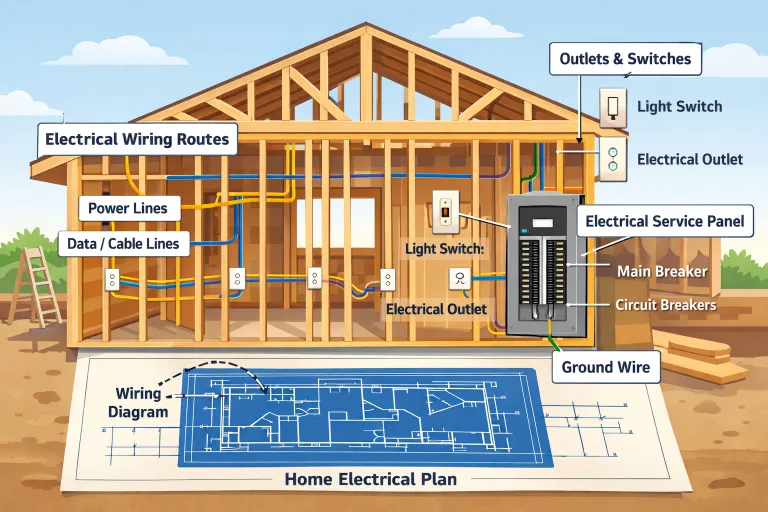
Establishing a clear electrical layout before breaking ground is crucial for new home builds. This involves detailed mapping of outlets, switches, circuits, and major appliances. Think beyond your immediate lifestyle. Consider where you might eventually add a home office, upgrade kitchen appliances, or need extra charging ports for electric vehicles. Strategic planning now prevents inconvenience and high costs from later remodeling.
Today’s homes require outlets for charging electronics in living rooms, bedrooms, and kitchens. Consult with experienced electricians who can offer advice based on your blueprint, lifestyle, and local requirements. Their expertise is crucial for identifying high-traffic zones and correctly spacing outlets to meet building codes and household demands. Planning strategically also ensures optimal locations for lighting controls, smart home systems, and entertainment center setups.
Understanding Building Codes and Regulations
Adhering to local building codes is not just a legal requirement. It is a matter of safety. Building codes are developed to reduce fire hazards and electrical failures in homes by specifying everything from the correct gauge of wire to the number of outlets required in each room. A licensed electrician will stay current with the latest regulations and guide your project from wiring techniques to inspection schedules. This partnership ensures all aspects of your home’s wiring pass local authority inspections, lowering the risk of costly delays or unexpected retrofits.
Periodic inspections during the construction process are vital. These reviews verify compliance at critical stages and address potential problems before the home is completed. Local government or utility websites can provide helpful guidance and resources regarding code standards and best practices. Additionally, the Consumer Reports guide on hiring electricians provides information on hiring qualified professionals for new construction projects.
Service Panel and Circuit Design
The service panel is the command center of your home’s electrical system. Its capacity must match the cumulative power needs of all rooms and installed or anticipated devices and appliances. Under-sizing the panel can lead to tripped breakers and limit your ability to integrate new systems in the future. Discuss your family’s needs with an electrician who can recommend a panel sized for growth, such as accommodating future additions, workshops, or electric vehicle chargers.
Breaking the home into logical circuits controls load distribution and reliability. Kitchens, bathrooms, HVAC systems, and entertainment zones should each have dedicated circuits where possible. Modern installations also require ground-fault and arc-fault circuit interrupters (GFCIs and AFCIs) to protect residents from shocks and electrical fires.
Choosing the Right Lighting Solutions
Effective lighting design makes your home inviting and adaptable. Start by identifying how each room will be used and selecting the appropriate lighting types—ambient, task, and accent—to match those functions. LED lighting is now favored for its energy efficiency, longevity, and lower heat output, making it a smart choice for nearly every application.
Layered lighting with dimmers and smart controls can adjust the mood and functionality of a space, whether you are hosting guests or relaxing. Consider zones that benefit from extra illumination, such as kitchen work areas, bathrooms, and entryways. Exterior lighting should address both aesthetics and safety, illuminating walkways and deterring intruders.
Addressing Special Electrical Needs
Every family’s lifestyle brings unique electrical demands. Whether you are designing for a home theater, setting up a workshop, or planning for remote work in a home office, these spaces require dedicated circuits and possibly additional voltage or specialized cabling. Anticipating these special requirements in advance means dedicated wiring and outlets can be installed during the rough-in stage, preventing costly and disruptive upgrades later.
Increasingly, new homes incorporate smart home features, whole-house surge protection, security camera wiring, and robust networking. Discuss these with your contractor early to coordinate wiring and equipment placement as part of the original design.
Collaborating with Other Contractors
Seamless communication among all contractors involved in your home’s construction benefits the final outcome. HVAC, plumbing, alarm, and electrical systems often share wall spaces or routing paths. Scheduling regular meetings and sharing plans helps avoid installation conflicts and supports efficiency. Early coordination also prevents last-minute changes that can result in project delays or rework.
Future-Proofing Your Home
Today’s electrical preparation means anticipating tomorrow’s needs. Consider fiber optic or Ethernet cabling for high-speed internet and connected devices. Install conduits for solar panels or backup generators, even if you do not plan to use them immediately. Adding capacity for an electric vehicle charging station or integrating smart home automation infrastructure can protect your resale value and ensure your home stands the test of time.
Conclusion
Carefully planning your home’s electrical system during the construction phase guarantees a safe, comfortable, and adaptable living space for years to come. Address every detail from layout to lighting, and rely on experienced professionals to navigate building codes and specialized needs. By prioritizing safety, functionality, and future readiness, you are making a wise investment in your family’s quality of life.